Description
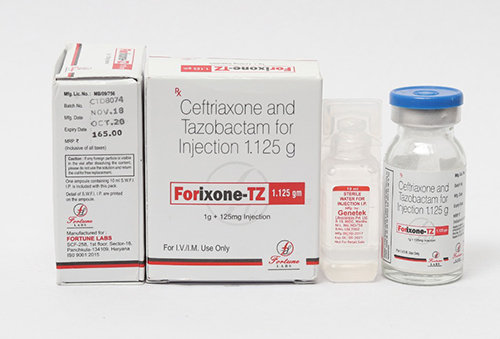
Cetriaxone and Tazobactam, for injection, 1.125 g, is a combination antibiotic formulation containing 1000mg of Ceftriaxone (a third-generation cephalosporin antibiotic) and 125 mg of Tazobactam (a beta-lactamase inhibitor). Ceftriaxone acts by disrupting bacterial cell wall synthesis, thereby killing or inhibiting susceptible bacteria, while Tazobactam protects the antibiotic from degradation by beta-lactamase enzymes produced by resistant organisms, enhancing its spectrum and effectiveness.
This injectable preparation is used under medical supervision to treat a variety of serious bacterial infections, including respiratory, urinary, intra-abdominal, skin, and soft tissue infections, and for surgical prophylaxis. Administration is by intravenous or intramuscular route, and it should only be used as prescribed by a healthcare professional. Call Fortune Labs today for more such products and medicines, and their third-party manufacturing.
Key Components of Ceftriaxone and Tazobactam for Injection 1.125
Ceftriaxone Sodium (1000 mg / 1 g): A third-generation cephalosporin antibiotic. It is a broad-spectrum bactericidal agent that kills bacteria by inhibiting the synthesis of their cell walls, which are necessary for survival.
Tazobactam Sodium (125 mg / 0.125 g): A beta-lactamase inhibitor. While it has little antibacterial activity on its own, it protects Ceftriaxone from being broken down by beta-lactamase enzymes produced by resistant bacteria, thereby enhancing the antibiotic’s effectiveness.
Uses of Ceftriaxone and Tazobactam for Injection 1.125
Respiratory Tract Infections: Including community-acquired and hospital-acquired pneumonia.
Urinary Tract Infections (UTIs): Both complicated and uncomplicated infections.
Abdominal Infections: Such as peritonitis, appendicitis, and infections after abdominal surgery.
Bloodstream Infections: Used to treat bacterial septicemia (sepsis).
Bone and Joint Infections: Effective for conditions like osteomyelitis and septic arthritis.
Brain and Nervous System Infections: Specifically, bacterial meningitis.
Skin and Soft Tissue Infections: Including cellulitis, abscesses, and diabetic foot infections.
Surgical Prophylaxis: Administered before surgery to prevent post-operative infections.
Typhoid Fever: Often prescribed when oral antibiotics are not suitable, or the infection is severe.
Partner with Fortune Labs for PCD Franchise with Ceftriaxone and Tazobactam for Injection 1.125
Fortune Labs, with all the latest molecules and continuously progressing under the table guidance of our Managing Experts.
- We provide a wide range of formulations such as tablets, injections, and new drugs that are DCGI-approved.
- These include Analgesics, Antibiotics & Anti-Infectives, Anticolds & Anti Allergics, and Antipsychotic Drugs.
- Apart from these, our range also includes Cardiovascular Drugs, Gastro & Antiemetic & Anti Ulcerant, Haematirics, Hormones, Neurology Supplements, and Nutritional Supplements.
- Our entire range also encompasses Table Syrup, Protesachetschet, Dry Powder, Capsules, Injectables, Ointment, Eye & Ear / Nasal Drops, and Yurvedic Products.
- Manufactured as per WHO GMP norms, Quality is Own Prime Concern; these are assured to have high-quality standards. This firm is a sister concern of Prosperity Six Pharmaceuticals (ISO 9001:2008, WHO, GMP)
Some Common Side Effects of Ceftriaxone and Tazobactam for Injection 1.125
Most common side effects are temporary and often resolve on their own once the body adjusts or treatment ends.
Gastrointestinal: Diarrhea (most common), nausea, vomiting, indigestion, and upset stomach.
Injection Site Reactions: Pain, swelling, redness, or a hard lump where the injection was administered.
Skin & Allergies: Skin rash, itching, and mild allergic dermatitis.
Neurological: Headache and dizziness.
Blood & Lab Changes: Abnormalities in white blood cell and platelet counts, elevated liver enzymes (detected via blood tests), false-positive results in urine glucose tests, or Coombs’ tests.
Frequently Asked Questions
What is Ceftriaxone and Tazobactam Injection 1.125 g?
It is a fixed-dose combination antibiotic injection containing Ceftriaxone (1,000 mg), a third-generation cephalosporin, and Tazobactam (125 mg), a beta-lactamase inhibitor. The combination extends the antibacterial spectrum and improves activity against beta-lactamase-producing bacteria.
What types of infections is this injection used to treat?
This antibiotic combination is indicated for a broad range of serious bacterial infections, including respiratory tract infections, urinary tract infections, intra-abdominal infections, septicemia, skin and soft tissue infections, and other severe bacterial conditions as determined by a clinician.
How does the combination work?
Ceftriaxone inhibits bacterial cell wall synthesis, causing bacterial death, while Tazobactam inhibits beta-lactamase enzymes that some bacteria produce to resist antibiotics. This dual mechanism improves effectiveness against resistant strains.
How is Ceftriaxone and Tazobactam 1.125 g administered?
The product is supplied as a sterile powder for reconstitution and must be administered intravenously (IV) or intramuscularly (IM) by a qualified healthcare professional. Dosage and frequency depend on the type and severity of the infection and patient characteristics, as determined by the prescriber.
What are the common side effects?
Patients may experience side effects such as diarrhoea, nausea, vomiting, rash, dizziness, headache, and injection site reactions. Most adverse effects are mild to moderate, but clinicians should monitor patients for allergic or severe reactions.
Can this injection be used in pregnant or breastfeeding women?
Use in pregnancy and lactation should be based on a careful assessment of benefits versus risks by the treating physician. Ceftriaxone and low concentrations of the drug may be excreted in breast milk, so caution is advised.
What storage conditions are recommended?
Store the vial in a cool, dry place, protected from light, and keep out of reach of children. Do not use beyond the expiry date